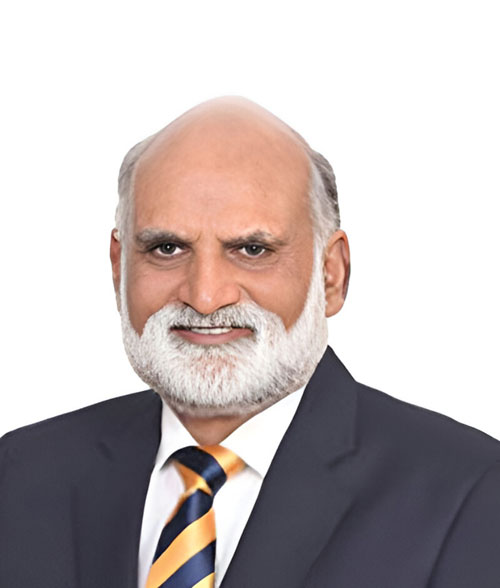
Anil Rajput
Chairperson
Every great civilisation in history has emerged from a crucible of necessity, shaped and strengthened under the pressures of environment, scarcity, conflict, and social transformation. Across millennia, the land of Bharat has not only endured these stresses but has developed civilisational responses rooted in balance, restraint, and continuity. Its historical experience offers lessons not merely in survival, but in resilience, values and progress.
It is therefore not surprising that some of the most influential minds in the world and global philosophers looked to Indian civilisation for deeper insight. They encountered a tradition that challenged materialism, engaged seriously with questions of consciousness and ethics, and recognised inner transformation as essential to lasting social order. For them, India represented a living civilisation whose ideas could help address the deeper crises of the modern world.
As Swami Vivekananda so powerfully expressed this civilisational confidence: ‘If there is any land on this earth that can lay claim to be the blessed land, the land to which all souls turn for solace, it is India.’ This insight captures not only India’s spiritual depth, but its enduring role as a source of moral and philosophical guidance for humanity. Mahatma Gandhi reflected a similar belief when he said ‘It is my firm opinion that no culture has treasures so rich as ours has’ – underscoring the depth of our civilizational inheritance.
It is from this legacy that Bharat Ki Soch, a research-based think tank, inspired by ancient Indian wisdom for contemporary challenges takes shape. Its work is anchored across six key pillars namely governance, economy and finance, sustainability and environment, agriculture and food security, health and wellness, and national security. These pillars reflect the pressures that are increasingly visible across the global landscape and the growing recognition that existing frameworks are under strain.
Over the last century, humanity has witnessed unprecedented population growth and economic expansion. While these developments have improved material conditions, they have also placed immense demands on the planet’s finite resources. Climate change stands as a stark indicator of this imbalance, threatening ecosystems, livelihoods and long-term stability. The challenge before us is therefore, how to align growth with limits and prosperity with responsibility.
At the same time, the global order appears increasingly fragile. Conflict today is no longer confined to physical battlefields; it extends into trade, technology, finance, supply chains and narratives. Despite progress, the world has struggled to build systems capable of ensuring lasting stability, peace, and social cohesion.
Modern economic models, developed to deliver prosperity and happiness, have succeeded in generating wealth while revealing serious limitations. In many societies, wealth has become the dominant measure of success and well-being. This has contributed to widening inequality, debt-driven growth, social fragmentation, and rising discontent—signalling the need to reassess whether prevailing paradigms are adequate and resilient.
It is in this context that Bharat Ki Soch seeks to contribute. We aspire to build a platform where India’s timeless wisdom engages meaningfully with today’s pressing questions, inspires fresh thinking and contributes to thoughtful nation-building. Our endeavour is to bring this wisdom meaningfully into public discourse through rigorous research and dialogue. In doing so, Bharat Ki Soch seeks to engage with a wide cross-section of society—policymakers, political leaders, diplomats, scholars, technologists, and practitioners to exchange ideas and build pathways toward a safer, more secure and more resilient future.
The aim is to foster conversations that is rigorous yet rooted, civilisational yet contemporary, local in action yet global in outlook. Our work embodies the spirit of the timeless philosophy of Vasudhaiva Kutumbakam - bringing India’s civilizational perspective to the world through ideas and action guided by shared responsibility, balance and the belief that the humanity is one family.