Arunachal Pradesh
Explore ancient forts, sacred monasteries, GI crafts, and rich mountain cuisine.
Historical Monuments
Bhismaknagar Fort and Remains
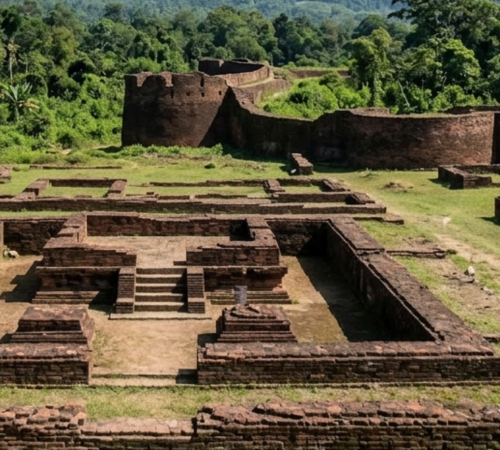
The Bhismaknagar Fort is located about 30km from Roing of the Lower Dibang Valley district of Arunachal Pradesh. In 1910, the archaeological site was notified to be of national importance which dates back to almost 8th century CE. The ruins popularly ascribe to the Chutia dynasty, that once ruled over the Sadiya region during the 11th to 16th century CE as their capital. Traditionally, the rulers of the Chutia dynasty trace their ancestry to Bhismaka, the legendary king of Bhismaknagar and father of Princess Rukmini (the wife of Lord Krishna).
Most of the structural remains at the site are composed of bricks. The city is well fortified with walls in the east, west and the south directions and Mishmi hills to the north. In 1965-70, the Government of Arunachal Pradesh excavated a large number of wheel-turned pottery, terracotta plaques with animal and floral designs, decorative tiles, figurines of horse and elephant, inscribed bricks with animal motifs etc., further accentuating the Fort’s historical significance.
Bhalukpong Fort Ruins
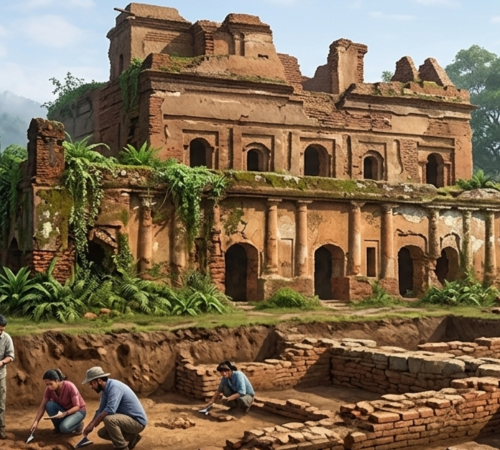
Located in the West Kameng district of Arunachal Pradesh, Bhalukpong Fort was the seat of King Bhalukpa who is believed to be from the Aka tribe. It is said to be associated with the Salasthambhas, who ruled the area from the middle of the 7th century. Later, it was ruled by the Palas of Assam during 10th to 12th century CE. The fort ruins include some brick structures and remnants of ring wells.
Ita Fort
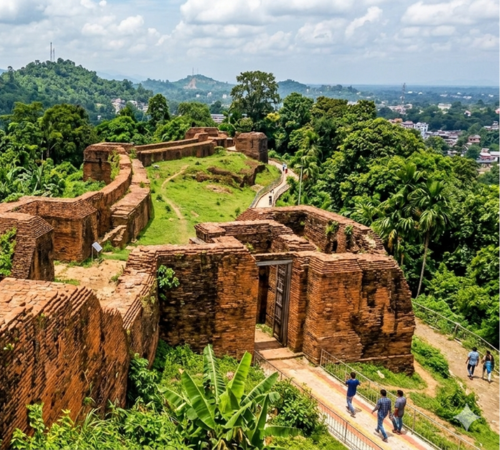
Ita fort is located in the capital city of Itanagar, within the Papum Pare district of AP. It has irregular shapes made out of bricks with about 16,200 cubic metre of brickwork belonging to the 14th-15th century. Itanagar derives its name from this historical site, since a brick is called as Ita in Assamese language. It has three different entrances towards the western, eastern and the southern sides. The fort is accredited to the Chutiya dynasty, since the then Chutia King Ratnadhwajpal is known to have built the fort around his kingdom from Biswanath till Disang to defend his empire.
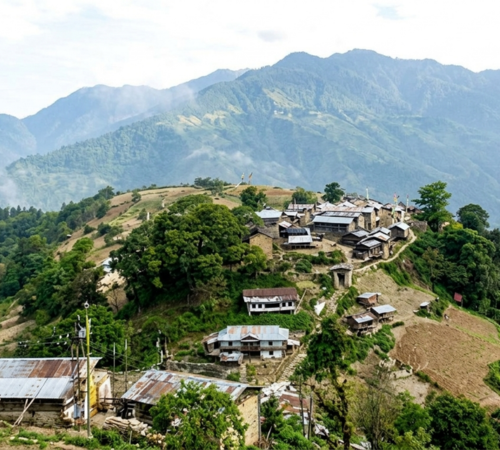
Thembang Fortified Village
Thembang Dzong is a village settlement of the Monpa tribe located in the West Kameng district of Arunachal Pradesh, sprawling within a fortified area of about 3.2 Acres. It comprises of several historical structures believed to have been constructed using the traditional technology of Monpas before 1100CE. They are generally composed of composite stone masonry and wood architecture. There are two gates, at the northern (entry) and the southern (exit) sides of the village fortification.
Ornamental features include carved stone blocks, mani walls (stone walls with prayers engraved), traditional wood carvings, paintings and manuscripts etched as murals and graffiti along the houses and ancient ruins. Pre-historic archaeological evidence has also been excavated by the Government of Arunachal Pradesh, such as Neolithic Celt, Neolithic tools, Stone Age axe etc. Thembang village is also included in the tentative list of UNESCO World Heritage Convention.
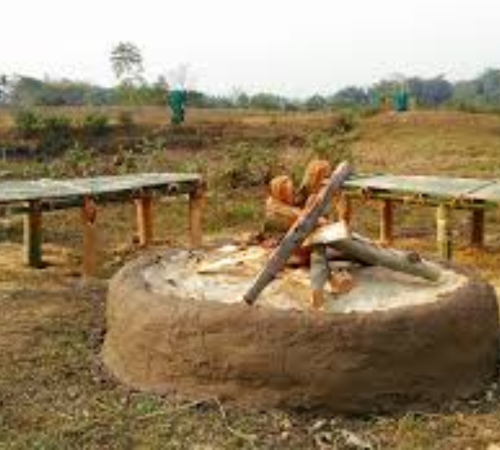
Naksaparbat
Naksaparbat is a significant Archaeological site excavated in the East Kameng district of Arunachal Pradesh. It is a vast habitational site belonging to the 14th – 15th century A.D. Some of the significant archaeological findings are ring well, few sculptural pieces, plinth of houses made up of stone etc.
Temples & Monasteries
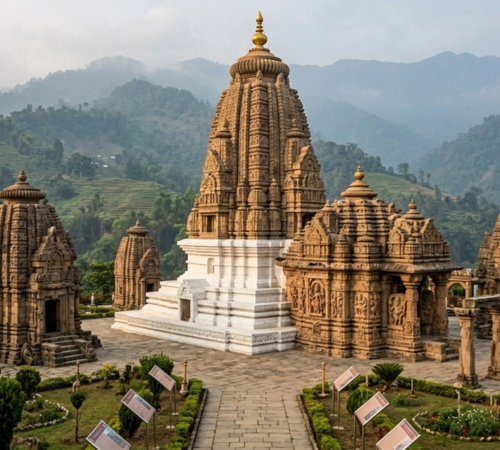
Malinithan Temple
Malinithan temple ruins date back to around 10th to 14th century AD built by the rulers of Chutia dynasty, who belonged to a Tibeto-Burmese tribe. It used to be a cultural centre of North-East India in the past, and even today the site is visited by thousands of devotees and tourists. Located in the Likabali town of Lower Siang district of Arunachal Pradesh, the buildings are made up of granite stones and contain sculptures of deities, animals, floral designs etc. It gives a view of the plains around it and the majestic Brahmaputra River as well.
According to Hindu mythology, Lord Krishna & Devi Rukmini rested here on their way to Dwarka from Bhismaknagar, also meeting Goddess Parvati (Malini) and Lord Shiva. Some of the beautiful sculptures found in the temple ruins include, Lord Indra riding his white elephant Airavata, Lord Kartikeya on his peacock, Lord Surya on his chariot, Lord Ganesha on his mouse and a Nandi bull. After the Kamakhya temple in Guwahati, Malinithan is considered one of India’s most famous shakti peethas.
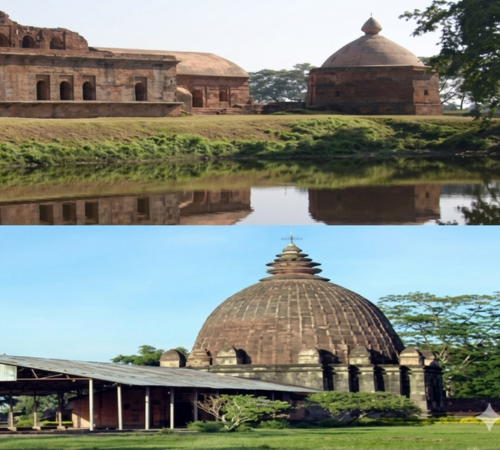
Ruins of Copper Temple (Tamreswari)
Located near Paya in the Lohit district of Arunachal Pradesh, the temple of tribal war Goddess Tamreswari or Dikkravasini is recorded to have been constructed by the King Muktadharmanarayana of Chutiya dynasty. The name of the temple comes from “tamra” or copper, since its roof is copper-plated. Built around 14th -15th century A.D., the temple is now in a dilapidated condition. The practice of human sacrifice prevalent in the temple was later stopped by the subsequent Ahom rulers.
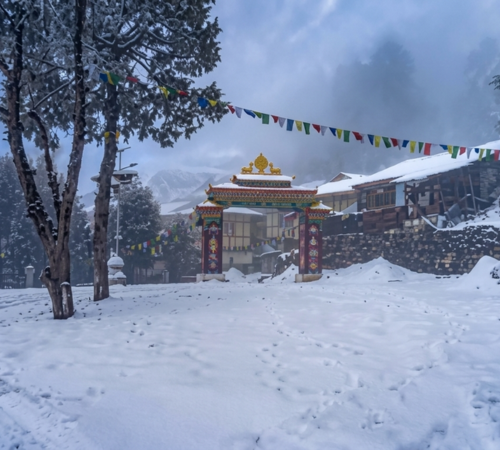
Brahma dung Chung Ani Gompa
This ancient monastery is located about 10 km from the town of Tawang in Arunachal Pradesh. Situated in the lap of Himalayan mountains, it is home to 45 nuns and is one of the very few nunneries that is run solely by nuns (female) and not monks (male). This nunnery was probably commissioned by Lama Karchen Yeshi Gelek from the Tsang province of Tibet in 1956 CE, who envisioned young girls receiving spiritual education and dedicating their lives to Buddhist practices.
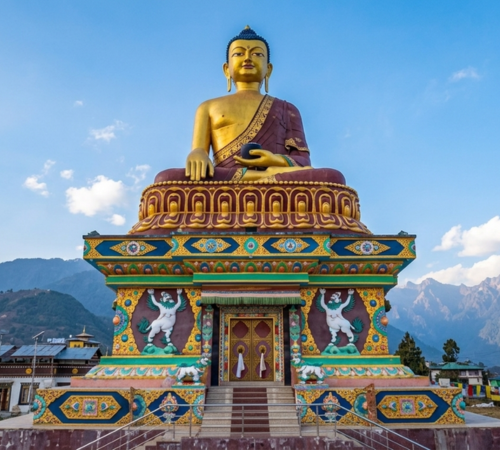
Tawang Monastery
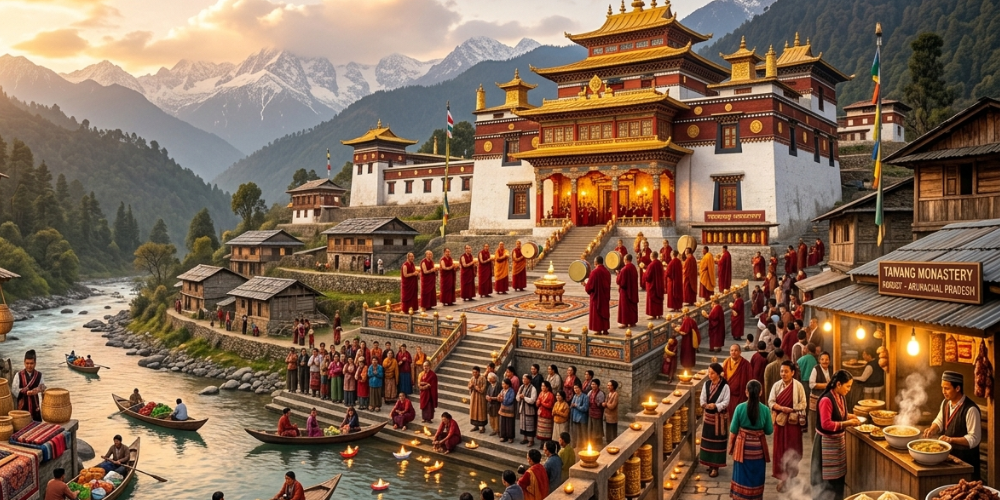
Tawang Monastery is the largest monastery in India and one of the most famous monasteries in the world. It was founded by Merak Lama Lodre Gyatso as per the wishes of the 5th Dalai Lama in the 17th century CE. It is located at an elevation of more than 3000 m belonging to the Mahayana form of Buddhism, consisting of about 65 residential buildings. Also known as Galden Namgey Lhatse (the divine paradise of complete victory), it offers visitors not only a spiritual retreat but also beautiful views of the Himalayan Tawang Valley. The monastery houses a huge golden Buddha statue and an extensive library with sacred texts and scriptures, such as Kangyur and Tengyur.
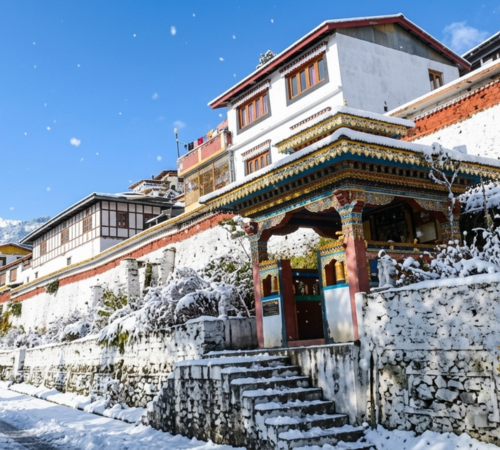
Urgelling Monastry
Located near Tawang, the Urgelling Monastery is important for Buddhists as it is believed to be the birthplace of the 6th Dalai Lama, Tsangyang Gyatso. It was built by the revered Lama Urgen Sangpo in the 1487 AD, and it is said to have withstood a Mongol attack in the 1700s as well.
Handicrafts (GI-tagged)
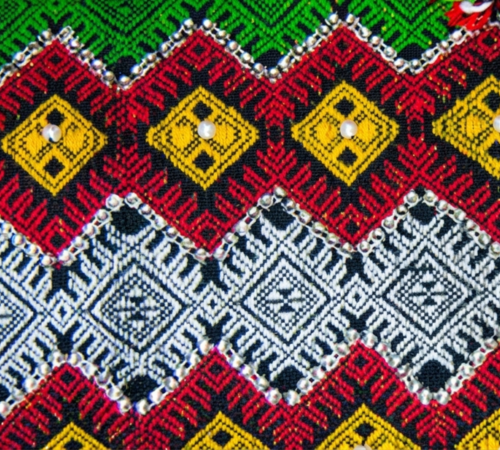
Idu Mishmi Textiles
These are the handloomed textiles of Arunachal Pradesh’s Idu Mishmi tribal group, which resides in the Mishmi Hills of Dibang Valley and Lower Dibang Valley. These woven fabrics are notable for their elaborate geometric designs, such as rhombus, triangles, angles, and lines. With striking hues like Teei (black), Shu (bright red), and Low (white), the Idu Mishmi fabrics find their application in items such as hand purses, shoulder bags, men’s coats, ladies’ shirts, wraparounds, etc. Traditionally, the locally derived fibers from nettle plants are taken for weaving these textiles.
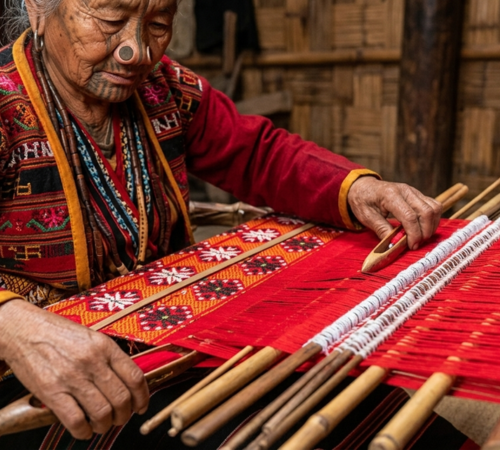
Tangsa Textile Product
The culture of Tangsa tribe from Changlang District is closely associated with weaving textiles, since weaving is linked to their ethnic identity, cultural traditions, and socioeconomic status. Tangsa women involve themselves in environmentally sustainable practices through the use of ancient loin looms and organic colors. The Tangsa textiles are famed for their elaborate designs, use of natural dyes, and intimate ties to the local environment. The practice of this craft is taught to the girls by their foremothers, demonstrating their commitment to preserving their cultural legacy through generations.
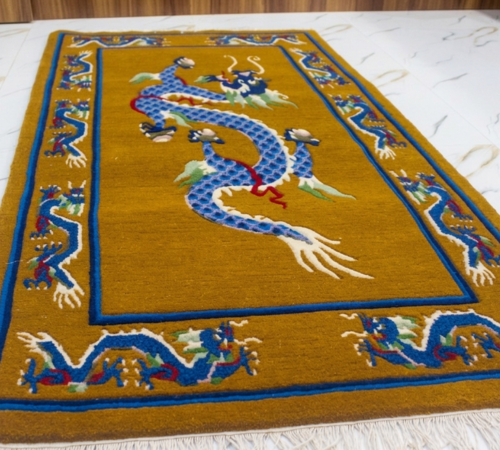
Handmade Carpet
Unlike the Mughal and Persian school of carpet making, the carpets in Arunachal Pradesh show strong Tibetan and Buddhist influences. Carpet weaving is generally done by the Monpa women in West Kameng and the tribes of North Siang district with high degree of skill. Carpets are woven in bright colors with chiefly Tibetan motifs such as the dragon or geometric and floral designs. Traditionally, the wool and their colors have been obtained using natural sources, such as sheep and yak for fibres, and roots, leaves, and bark for dyes.
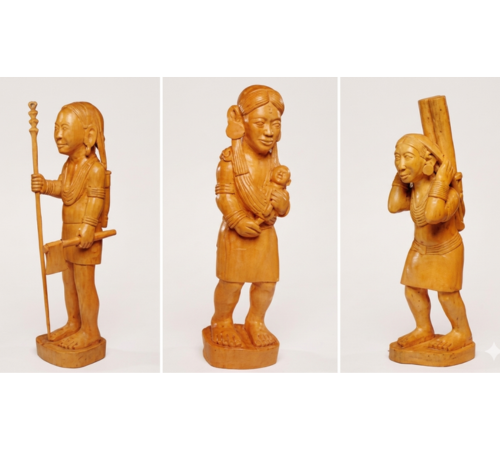
Wancho Wooden Craft
Wancho wooden crafts from the Longding district are known for their unique designs that feature human heads. Items such as tobacco pipes with head-shaped bowls and drinking mugs with warriors carrying heads, reflect the Wancho tribe’s cultural heritage and artistic brilliance. This sacred craft connects the tribe to its age-old spiritual beliefs and ancestry.
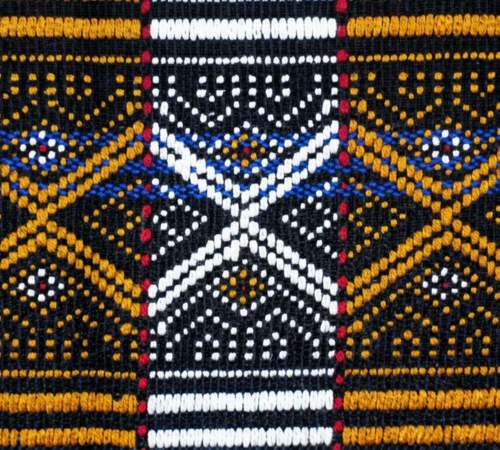
Apatani Textile
Apatani tribe, native to the Ziro Valley in the Lower Subansiri district of Arunachal Pradesh, produces textiles with different types of colourful, attractive and unique designs. These intricate motifs use bold geometric patterns such as diamonds and zigzag lines, often featuring angular designs. The tribe generally weaves their textiles on occasions such as cultural festivals and religious rituals.
Monpa Textile
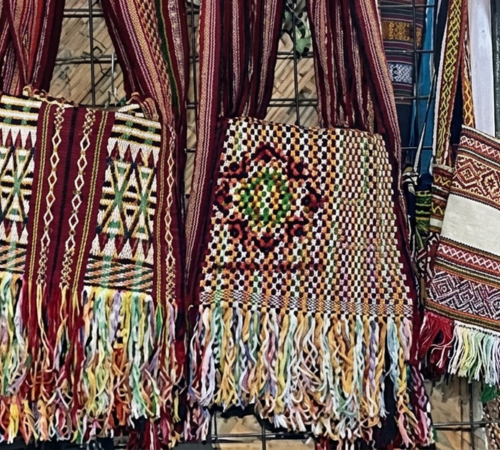
Monpa Tribe from the Tawang and West Kameng districts showcase a deep tradition of weaving textiles. It is predominantly practiced by women, who are trained from a young age to carry on this art form. The Monpas use wool and cotton yarn as their chief materials, creating essential clothing items, blankets, tents from sheep and yak hair. Their textiles express rich Buddhist traditions, using typical colours of red, yellow, white, and black.
Nyishi Textile
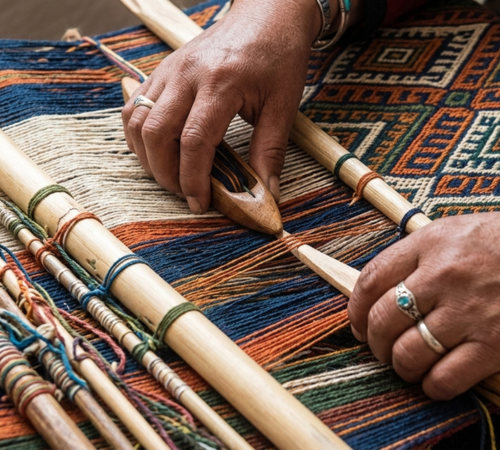
These textiles represent the Nyishi tribe’s enduring tradition and commitment to preserving their identity. This household craft is primarily practiced by women, weaving culturally important dresses and bags to be worn especially during auspicious occasions. This attractive age-old craft features distinct traditional motifs and colour combinations. Their looms are simple and portable, generally using a single heddle tension on a loin loom that can be easily operated.
Monpa Handmade Paper
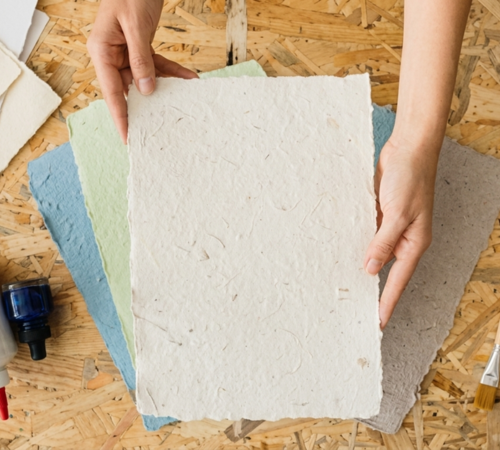
Mon Shugu, the art of making Monpa Handmade Paper originated about 1000 years ago in Tawang, Arunachal Pradesh. This fine-textured paper used to be a primary source of livelihood for nearly every household. It is used for writing Buddhist scriptures and hymns in several monasteries depicting its historical and religious importance. The Monpas’ artistry, spiritual devotion, and commitment to preserving their cultural crafts is perceptible through their printed texts, flags, and prayer wheel scrolls. Made from the bark of a local shrub, Shugu Sheng (Daphne papyracea), the Monpa paper is eco-friendly, durable and insect-resistant as well.
Adi Textile
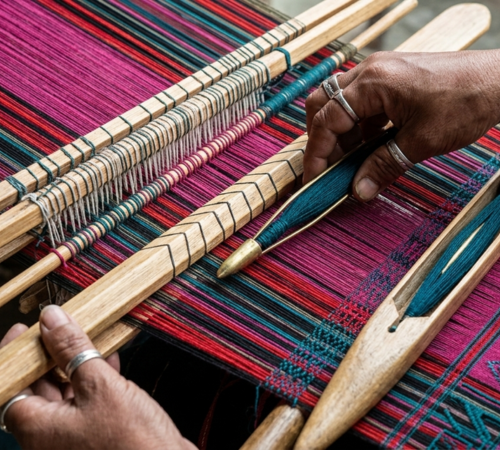
The Adi tribe from regions such as Siang, East Siang, and West Siang create vibrant Gale designs from locally sourced materials like bamboo, cotton, and wool. Their textiles comprise of bold stripes and nature-inspired motifs. They focus on simple lines but weave great variety of patterns, such as arrangements of red and black stripes on a white background; white and yellow stripes on a black ground; alternate bands of red and black or of olive-green and brown.
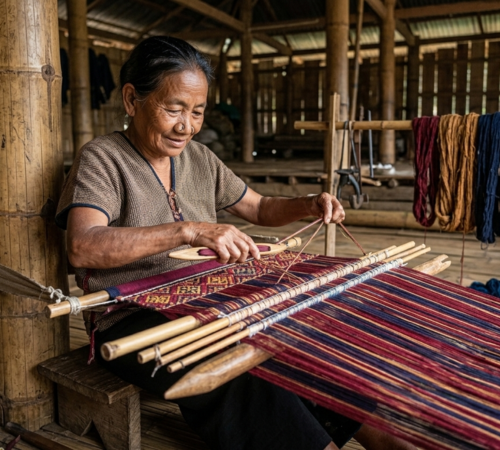
Tai Khamti Textile
These fabrics are traditionally handwoven by the Tai Khamti community in the Namsai district of Arunachal Pradesh. Known for their beautiful patterns and vibrant hues, these textiles are inspired by Buddhist (Theravada) symbols and nature reflecting the tribe’s distinct cultural heritage and spiritual beliefs.
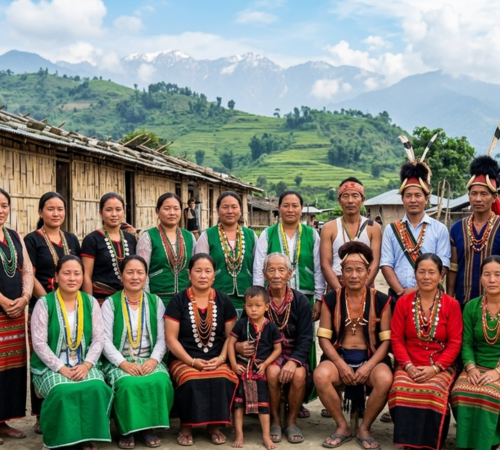
Galo Textile
Galo tribe, especially women, show exceptional skill and artistry in their weaving. They often weave white fabrics with simple designs on the centre. Cotton and silk yarns are used with natural dyes made from plant extracts, bark, and roots, such as red, green, yellow, and blue. Their intricate designs and patterns generally include flowers, birds, animals, and geometric shapes, inspired by their natural environment. A red and yellow skirt with vertical stripes is popular among the Galo women.
Cuisine
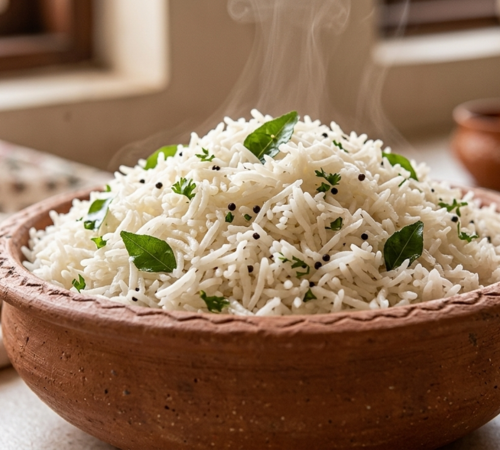
Rice
Rice is the staple food of Arunachal Pradesh. Apart from the usual way of cooking rice in a cooking pot, the local people also use two traditional ways to prepare it – Dung Po and Kholam. In Dung Po, two brass utensils are used to steam the rice and served in leaves. In Kholam, a bamboo tube is filled with rice and water and heated beside a fireplace. After it is cooked, the outer layer of the bamboo is removed and rice is served.
Some of the rice dishes prepared here include, Khaow Nam Paak (rice with chicken or fish) – a specialty of the Khampti tribes that looks like a risotto in its texture and richness, Kaaji (rice augmented with pork fat) – made by the Apatani Tribe in Lower Subansiri District, Anu-Nu (Rice Dish with Fish/Chicken) and Asumbi (Chicken Rice Porridge) by the Idu-Mishmis, Aamin (Rice & Chicken Porridge) from the Galo tribe, Naokai Sae Khawpong (Chicken with rice gravy) – another Khampti dish with rich gravy, among others.
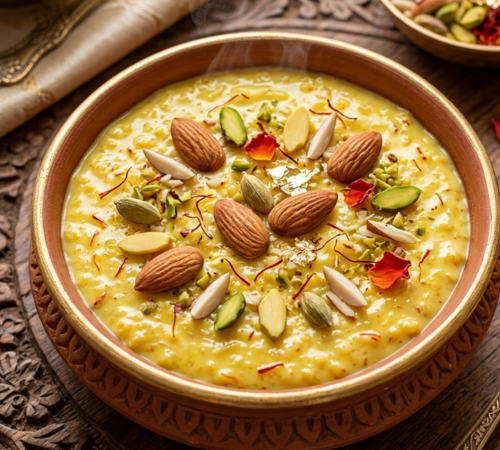
Wungwut Ngam
Wungwut Ngam is a local dish prepared with chicken and rice powder. The rice is first roasted brown and grounded into a fine powder. Then it is cooked with chicken meat along with some local herbs and spices.
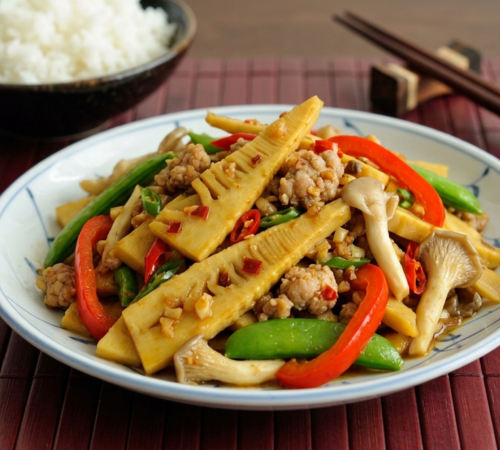
Bamboo Shoots
Bamboo shoot is relished all-over Northeast India. In Arunachali cuisine, it is generally combined with cooked meat, especially pork. Bamboo shoots are also fermented and made into pickles with ghost peppers, used in curries and chutneys to enhance flavour. Bamboo shoots are versatile as they can be prepared fresh, fermented, dried, or pickled. Paa-Pho (Small Fish with Dried Bamboo Shoot) from Khampti tribe, Ato (Boiled Chicken with Bamboo Shoot) – prepared by Idu-Mishmis, are some example dishes with bamboo shoots.
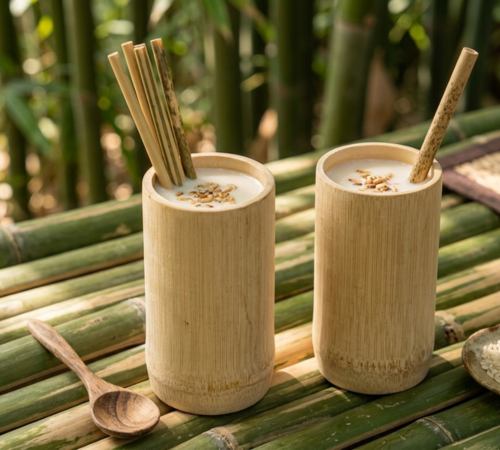
Apong and Marua Apo
Apong is a local beer made from fermented rice, traditionally served in bamboo tubes. After the process of drying, smoking, fermenting and filtering, the final product comes out as a sweet rice beer. The rice beer is home-made and is mostly consumed during local festivals. Generally produced by women, this fermented beverage is an important part of the socio-cultural life of Arunachalis. Some varieties of Apong include Nogin/Pona (made from rice, water and local yeast),
Tamii/Temey Opo (uses millet as a core ingredient), among others.
Apart from Apong, Marua Apo is another popular and locally brewed beverage. It is made from finger millets and known for its nutrient-dense nature.
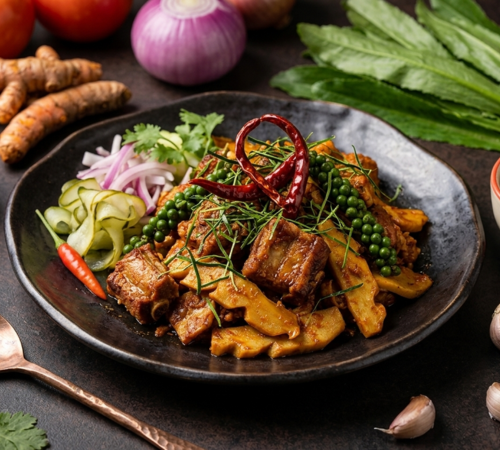
Pika Pila
Pika Pila (Pike Pila) is a famous delicacy from the Apatani tribe of Arunachal Pradesh. This local dish is prepared from the organic ashes of plants, which are sun dried and made into liquid form. The liquid is then mixed with pork fat, smoked meat, bamboo shoots and some local vegetables.
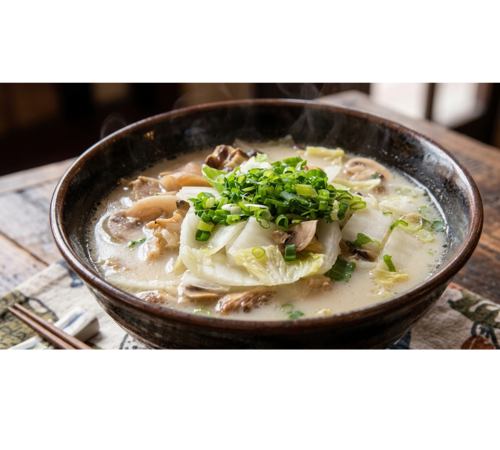
Ngatok and Pasa
Ngatok is a local fish stew cooked with a stone. The stone is wrapped in a banana leaf and kept with cut fish pieces marinated in local herbs and spices. It is then covered in heated charcoal to cook. This unique cooking style gives a smoky flavour to the dish.
Pasa is another dish made with fresh river fish, that is finely minced. This soup uses a pungent paste of green chillies, garlic, ginger, khumpatt leaves, etc.
Lukter and Pehak
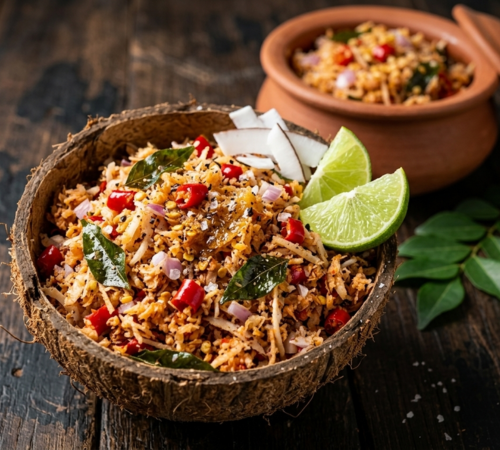
Lukter (Yamter/Dakter) is a side dish that contains dried chillies and dried/smoked meat. The chilli used is usually the ghost pepper or Bhut Jolokia. It is spicy and flavourful, available in markets packed in bottles or bags.
Pehak is another side dish made with fermented soya beans and king chillis. This spicy chutney has a strong savoury smell and taste.
Chura Sabzi
Chura Sabzi is a traditionally prepared local dish known for its spicy flavour. It is made with fermented cheese of cow or yak milk, topped with chilli flakes and little pieces of king chilli.
Thukpa
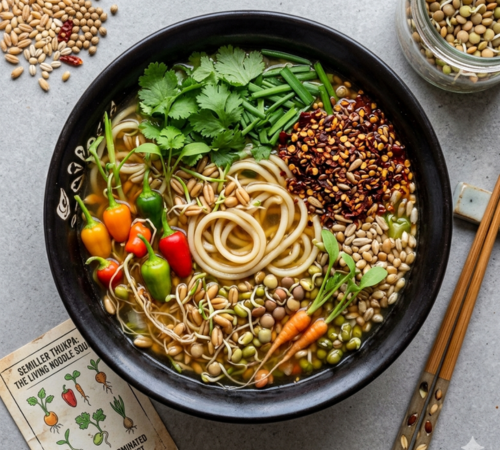
Thukpa, a staple diet of Monpa community, can be traced back to the eastern part of Tibet. This Himalayan soup is prepared with boiled rice noodles, vegetables and meat. It is a common sight in many local restaurants.