India’s Journey Towards Economic Transformation
“India has boarded a speedy reforms express…” The world is tilting towards India. India’s historical trajectory from antiquity to the early modern period was marked by multiple phases of progress. A striking feature common to these phases was the development of institutional frameworks and technological innovations that integrated large parts of South Asia with Africa, West Asia and Europe.
India emerged as a major producer of textiles, spices, aromatics, precious stones and metals, all of which were in high global demand. The subcontinent functioned as a central hub of Indian Ocean trade. Trade in the Indus Valley civilisation was largely organised with a wide range of goods circulating across regions.
India accounted for approximately 22–24 percent of world GDP around 1600, reflecting the scale of production, manufacturing and commercial integration achieved before colonial dominance.
Transformation Through Reforms
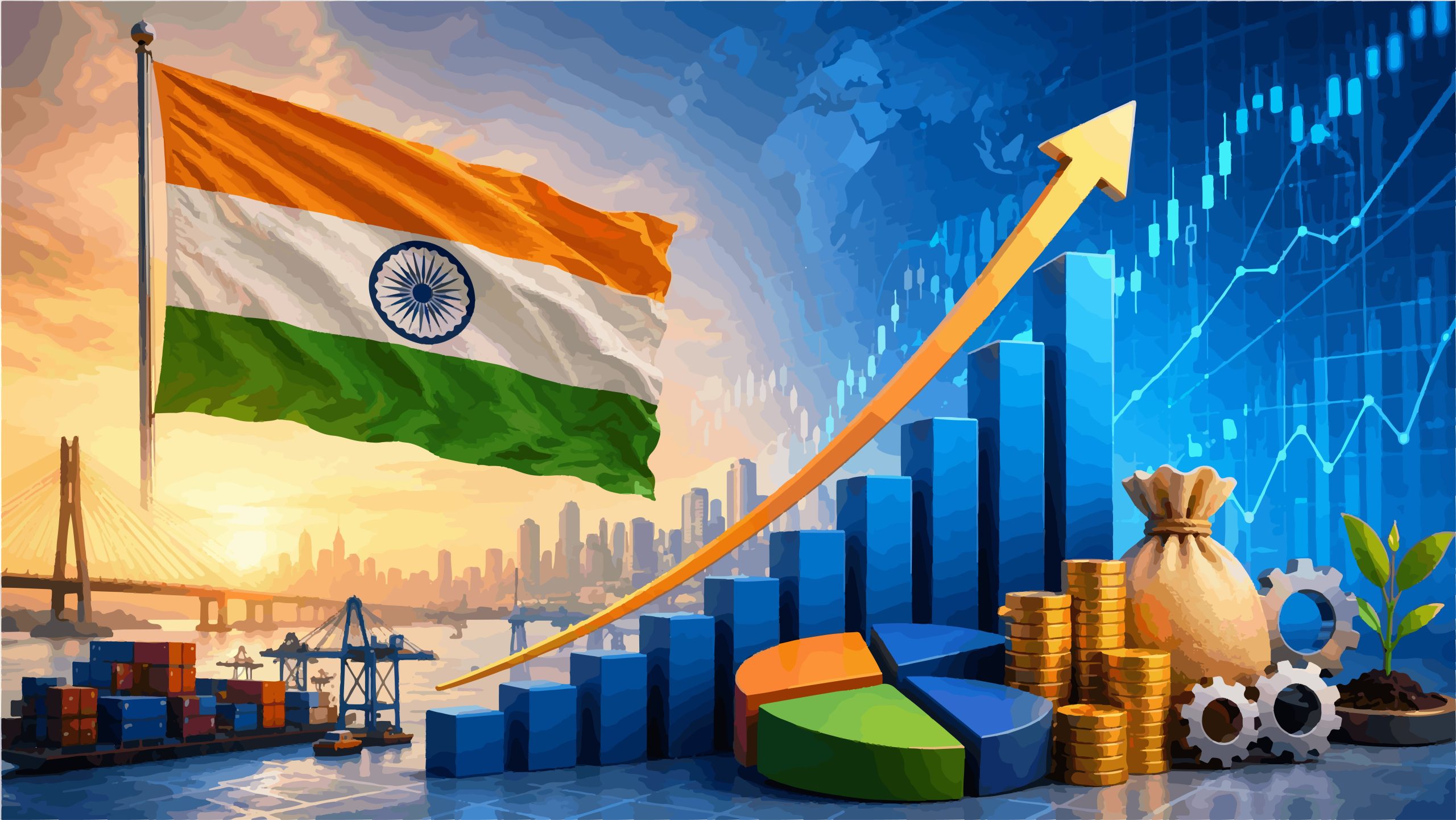
However today, India has resurged in its economic power and has become the fastest growing economy in the world. In the words of IMF, India is the “only bright light in the otherwise dark horizon”. India is set to become the third largest economy in a few years.
The last decade has witnessed a truly transformational change, marked by focused and sustained execution. This transformation has been built on four key pillars. The first is public investment in physical, digital and social infrastructure. The second pillar is inclusive growth ensuring that the benefits of national growth are shared across society.
The third pillar is manufacturing and innovation, while the fourth is simplification. Together, these pillars supported by a strong technological base are enabling robust real growth in the range of 7 to 8 percent.
“India has emerged as a long-term anchor for global investment, with investors increasingly viewing the country as a driver of sustained growth.”
India as a Global Economic Power
India is universally recognised as a credible and reliable trade partner, with consistent delivery strengthening global confidence. Rapid AI adoption under Industry 5.0 is transforming Indian industries, while digital public infrastructure is enabling innovation at scale.
The next generation of GST reforms and improved compliance frameworks for MSMEs will strengthen India’s manufacturing capabilities, while enforcing strategic disinvestment and asset monetisation will propel the growth of free enterprise.
Atmanirbhar Bharat transformed crisis into opportunity during COVID-19, leading to a leap in economic growth. India emerged as the “Vishwamitra” — the pharmacy of the world during COVID-19 — showcasing pharmaceutical capabilities on a global scale.
The continued momentum of our “Make in India” initiative will culminate in achieving 500 GW of clean green energy by 2030. The IMF projects a growth rate of 7 to 7.5 percent for India over the next two to three years.
India’s Future Economic Vision
India has navigated global tariff pressures with considerable astuteness by diversifying its trade partnerships. The country has signed free trade agreements with New Zealand, Oman, CETA with the UK, as well as landmark FTAs with the European Union.
India’s rise is because of the sagacious economic policies and economic resilience that despite tariff pressures in certain sectors, trade figures have continued to grow. India has always come out victorious in every crisis irrespective of global vicissitudes and challenges.
India will continue to rise in economic stature, becoming the true currency of global dominance. Anchored in Atmanirbhar Bharat, the vision of a Viksit Bharat places India firmly on course to become a USD 35 trillion economy by 2047.