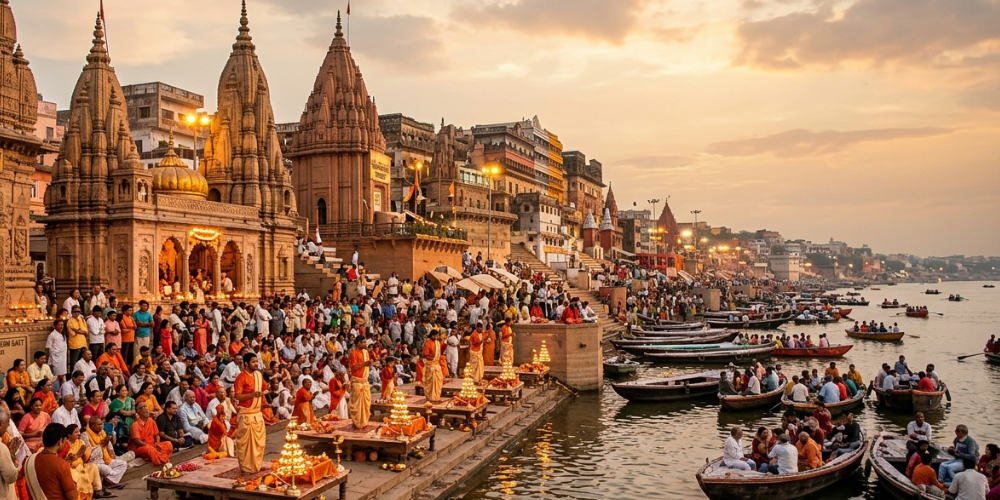
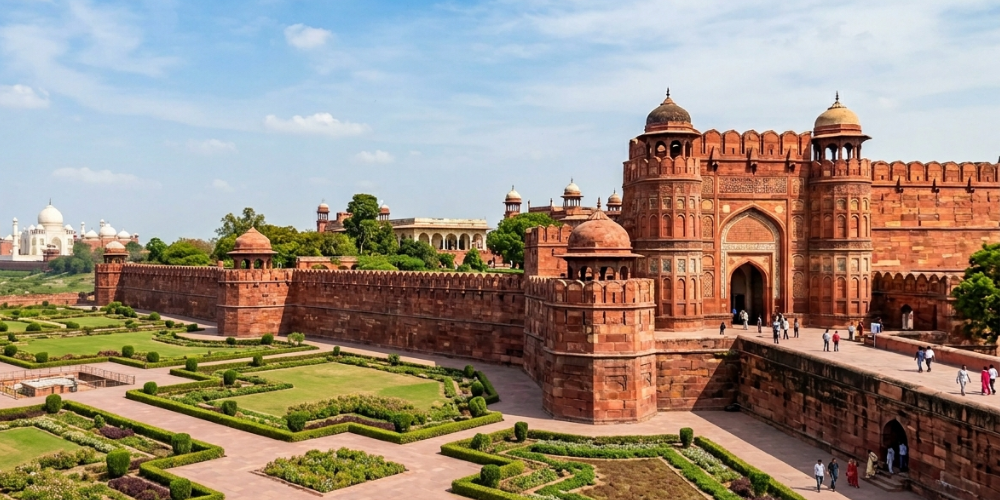
Agra Fort
For a very long time, this colossal fortress, called the Agra Fort, served as the seat of power, where influential emperors of the flourishing Mughal dynasty ruled. Today, it is a UNESCO World Heritage Site that stands as a living embodiment of the Mughals’ architectural brilliance and military prowess.
Considered the first grand citadel of the Mughals, the Agra fort sits alongside the Yamuna River, about 2.5 kilometres from the Taj Mahal. It also holds a distinguished place in one of the most popular north trips—the famous Golden Triangle Tourist Circuit of India (Delhi, Agra, and Jaipur), which enthrals visitors with its captivating historical narrative.
Owing to its red sandstone wall, Agra Fort is also called as Red Fort but long before its association with the Mughals, this grand edifice used to be called by a different name. This ancient citadel was once known as Badalgarh when it belonged to the Rajput kings. It witnessed a series of occupations and wars. In the 16th century, a new chapter unfolded for Badalgarh when the Mughal Emperor Akbar set his sights on Agra, determined to establish it as the capital of his expanding empire. Under Akbar, Badalgarh was reconstructed and fortified, evolving into the Agra Fort.
As the royal residence for four generations of the Mughal dynasty, Agra Fort embodies a diverse array of architectural contributions by its imperial residents. While Akbar once adorned the Agra Fort with numerous buildings boasting Bengali and Gujarati influences, Shah Jahan’s era demolished some structures to make way for his lavish white marble creations. Aurangzeb added an outer wall and deep moat, ensuring the fort’s defences were impenetrable, while the British occupation led to the destruction of many of these marvels in marble.
Among the surviving marvels is the Jahangir Palace, which Akbar commissioned for his son but was used as a residence for royal women.
Then there’s the exquisite Khas Mahal, where Shah Jahan lived with his beloved wife, Mumtaz Mahal. Local guides say it was embellished with pure gold and precious gems. You can click pictures of its beautiful white marble with intricate etchings and floral inlay work. It also features ornate ceilings, fountains, alcoves, and lattice windows, offering captivating views of the Taj Mahal across the river.
As you explore the fort further, you will come across Musamman Burj, believed to have been Shah Jahan’s place of confinement until his demise. It also offers stunning views of the Taj Mahal. Another essential part of the fort is the renowned Diwan-i-Khas, boasting intricate white marble inlay work. Shah Jahan remodelled it, which houses the opulent Peacock Throne, which was made with gold and valuable gems.
And don’t miss the incredible mirrorwork adorning the walls and ceiling of the Sheesh Mahal, which used to be the dressing room for royal ladies. In addition to these notable sites, you can wander through Shah Jahan’s marble mosques, public audience halls, courtyards, and gardens.
Apart from the iconic architecture reflecting the legacy of its rulers, the Agra Fort was also designed in a very practical way. To bear with the hot summers of Agra, proper ventilation was ensured inside the fort and an underground water system was also designed to cool the rooms. Following the demise of Aurangzeb in 1707, Agra Fort’s fortunes mirrored the decline of the Mughal dynasty. The Marathas seized the fort, aiming to liberate India from the Mughal rule and sparked a series of conflicts that lasted over a century. Eventually, in 1803, the British assumed control of the fort.
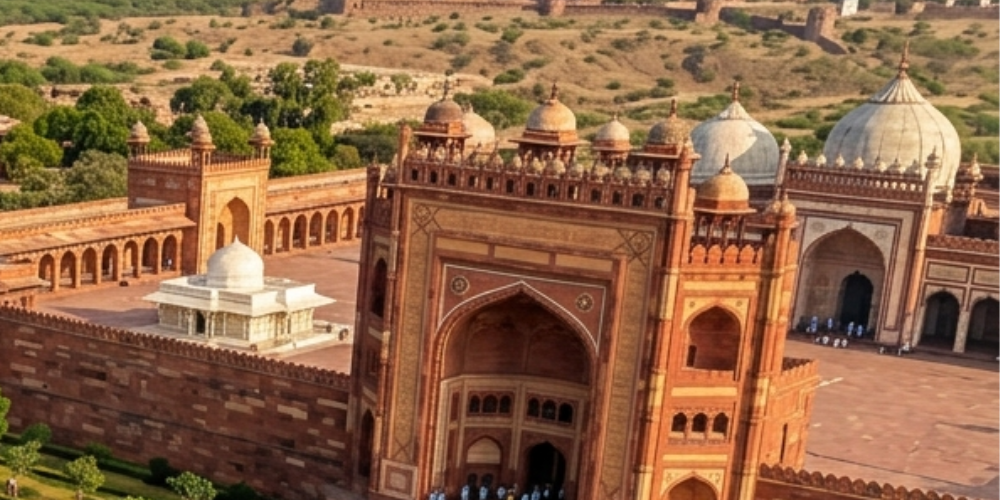
Fatehpur Sikri
Built during the second half of the 16th century by the Emperor Akbar, Fatehpur Sikri (the City of Victory) was the capital of the Mughal Empire for only some 10 years. The complex of monuments and temples, all in a uniform architectural style, includes one of the largest mosques in India, the Jama Masjid. Fatehpur Sikri is located in Agra District in the State of Uttar Pradesh in northern India. It was constructed southeast of an artificial lake, on the slopping levels of the outcrops of the Vindhyan hill ranges. Known as the “city of victory”, it was made capital by the Mughal emperor Akbar (r. 1556-1605 CE) and constructed between 1571 and 1573.
Fatehpur Sikri was the first planned city of the Mughals to be marked by magnificent administrative, residential, and religious buildings comprised of palaces, public buildings, mosques, and living areas for the court, the army, the servants of the king and an entire city. Upon moving the capital to Lahore in 1585, Fatehpur Sikri remained as an area for temporary visits by the Mughal emperors. The city, which is bounded on three sides by a wall 6 km long fortified by towers and pierced by nine gates, includes a number of impressive edifices of secular and religious nature that exhibit a fusion of prolific and versatile Indo-Islamic styles. The city was originally rectangular in plan, with a grid pattern of roads and by-lanes which cut at right angles, and featured an efficient drainage and water management system. The well-defined administrative block, royal palaces, and Jama Masjid are located in the centre of the city. The buildings are constructed in red sandstone with little use of marble.
Diwan-i-Am (Hall of Public Audience) is encircled by a series of porticos broken up at the west by the insertion of the emperor’s seat in the form of a small raised chamber separated by perforated stone screens and provided with pitched stone roof. This chamber communicates directly with the imperial palace complex clustered along a vast court. At the north side of it stands a building popularly known as Diwan-i-Khas (Hall of Private Audience), also known as the ‘Jewel House’. Other monuments of exceptional quality are Panch Mahal, an extraordinary, entirely columnar five-storey structure disposed asymmetrically on the pattern of a Persian badgir, or wind-catcher tower; the pavilion of Turkish Sultana; Anup Talao (Peerless Pool); Diwan-Khana-i-Khas and Khwabgah (Sleeping Chamber); palace of Jodha Bai, the largest building of the residential complex, which has richly carved interior pillars, balconies, perforated stone windows, and an azure-blue ribbed roof on the north and south sides; Birbal’s House; and the Caravan Sarai, Haram Sara, baths, water works, stables and Hiran tower. Architecturally, the buildings are a beautiful amalgamation of indigenous and Persian styles.
Several repairs and conservation works have been carried out from as early as the British Government period in India to the Buland Darwaza, Royal Alms House, Hakim Hammam, Jama Masjid, Panch Mahal, Jodha Bai palace, Diwan-i-Am, pavilion of the Turkish Sultana, Birbal’s House, mint house, treasury house, etc., without changing the original structures. In addition, paintings and painted inscriptions in Jama Masjid, Shaikh Salim Chisti’s tomb, Akbar’s Khwabgah, and Mariam’s house have also been chemically preserved and restored according to their original conditions.
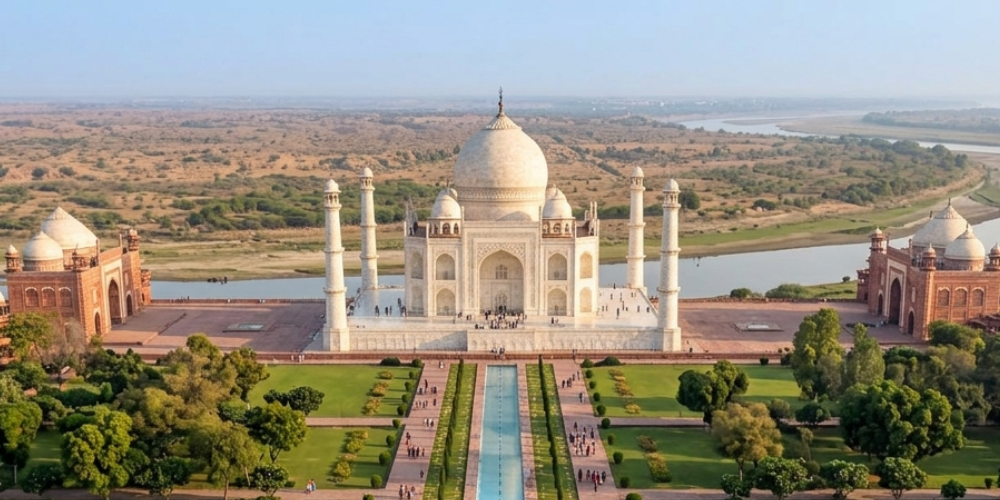
Taj Mahal
The crown jewel of Mughal architecture, the Taj Mahal was built by Shah Jahan in memory of Mumtaz Mahal. Crafted in white Makrana marble, it stands as one of the Seven Wonders of the World.
Its charbagh gardens, reflecting pools, intricate pietra dura work, jali carvings, mosque, and symmetrical minarets make it timeless.
MUSEUMS
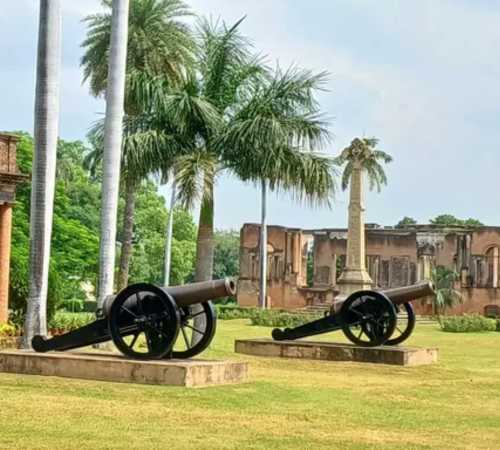
1857 Memorial Museum, Lucknow
In the historic heart of Lucknow stands the 1857 Memorial Museum – a powerful testament to India’s first organized struggle for independence. Housed within the battle-scarred walls of the Residency complex, this remarkable museum brings to life the dramatic events of the First War of Independence. Journey through eleven chronological galleries where history unfolds before your eyes, starting with extraordinary period lithographs by C.H. Mecham and G.F. Atkinson that capture the Residency’s transformation from pre-siege grandeur to post-rebellion aftermath. Be moved by the British Gallery’s poignant high-relief sculptures commemorating Sir Henry Lawrence and Miss Susanna Palmer, whose stories echo through time. Marvel at authentic artefacts including period weaponry, musical instruments, and cannon balls that witnessed the siege firsthand. Experience the conflict through carefully crafted dioramas and translites of battles at Alambagh and Sikanderbagh. The museum’s modern interpretation includes an innovative sound sculpture installation focused on seven revolutionary areas influenced by Jayprakash Narayan, while the Colonial India Gallery presents a photographic journey of India’s Independence struggle from 1905 to 1947.
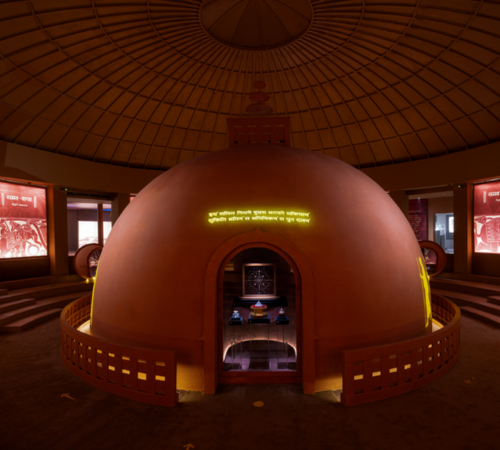
The Piprahwa Museum (MUSEUMS)
The museum is a part of the Piprahwa Site in Siddharthnagar (UP). It showcases artifacts from the ancient Kapilavastu site, including relics believed to be Buddha’s ashes from the 1898 excavation, bone fragments, caskets, and jewels, highlighting early Buddhist history and the Shakya kingdom where Buddha spent his youth, with recent major expositions in Delhi reuniting repatriated relics with national collections for broader public viewing.
Key Highlights of the Piprahwa Site & Museum:
- Significance: Believed to be the site of ancient Kapilavastu, the capital of the Shakya kingdom, where Buddha lived.
- Artifacts: Displays reliquary urns, votive offerings, jewels, and other items from the 1898 discovery by W. C. Peppe alongside later finds.
- Repatriated Relics: Recent efforts brought back relics from the Peppé family collection, reuniting them with Indian collections for major exhibitions like “The Light & the Lotus”.
- Exhibition Focus: Thematic displays cover Buddha’s life, the relics’ journey, Buddhist art, and the significance of the discoveries.
- Modern Presentation: Features audio-visuals, digital reconstructions, and models (like the Sanchi Stupa) to explain the history and spiritual meaning.
- In Essence: The Piprahwa site and its museum offer a tangible connection to the Buddha’s early life and the beginnings of Buddhism, featuring some of the most important relics in the Buddhist world.
Virtual Experiential Museum
Virtual Experiential Museum (VEM) in a Centrally Protected Monument under Archeological Survey of India, Man-Mahal.
The Prime Minister, Sri Narendra Modi inaugurated the newly established Virtual Experiential Museum (VEM) in a Centrally Protected Monument under Archeological Survey of India, Man-Mahal, situated on the bank of the Ganges near holy Dashashwamedh Ghat at Varanasi today.
Virtual Experiential Museum has been established by the National Council of Science Museum (NCSM) working under the Ministry of Culture, Government of India. NCSM has worked hard to show a glimpse of various cultural aspects, tangible and intangible, of Varanasi through the use of modern and sophisticated virtual reality technology in this museum. Indian National Trust for Art and Cultural Heritage (INTACH) helped in designing and curation of this Virtual Experiential Museum and also in preparing of script for various documentaries to be shown in this VEM.
A tour of VEM will be a unique experience for the visitors where they will get the experience of the holy ghats, classical music, weaving of sari, Ram Leela, 3D view of monuments, narrow lanes and betel shop etc. of Varanasi in an interesting way with the help of curved T.V. screen, paintings, touch screens and projectors etc.
The story of the descent of the holy Ganga on earth will also be shown to the visitors in a most interesting manner.
Before the setting up of VEM, the centrally protected monument observatory of Man-Mahal was conserved scientifically as this building was constructed by Raja Man Singh in 1600 CE, a close associate of Mughal Emperor Akbar. Later, in 1734, an observatory was constructed on the roof of this monument by Sawai Jai Singh II of Jaipur, which was planned by Samarath Jagannath to calculate time, prepare lunar and solar calendar, study movement & angles of star and planet.
Historical Monuments
Barah Khamba
The monument known as Bara Khambha is situated at a short distance to the north of the Kagarol at a distance of 25 km south-west from Agra. It is the mausoleum of Sheikh Amber who was a great saint during Akbar’s period. The mausoleum stands on a lofty double platform, over which twelve pillars carry the domical roof, hence the name Bara Khamba. The central chamber has three other cenotaphs, which may contain relics of the Sheikh’s relatives.
Chauburji
Chauburji was the temporary Burial place of the emperor Babur, together with the Chabutra on which it stands, Agra
The Chauburji is situated across the river Yamuna in the neighbourhood of the tomb of Itimad-ud-Daula. Though this structure had been the temporary burial place of Babur, whose mortal remains afterwards were transferred to Kabul for final burial. Carlleyle also mentions that this place was used by the Britishers as residence. However, many architectural features such as its square plan, raised platform with water pools, shapes of arches, attached towers at the corners and decorative motifs on the extant red sandstone veneering indicate that it is a prototype of Itimad-ud-Daula’s Tomb.
Itimad-ud-Daula Tomb
Itimad-ud-Daula’s Tomb is situated on the left bank of river Jamuna next to Chini-ka-Rauza. Itimad-ud-Daula was the title given to Mirza Ghiyath Beg, father of Nur Jahan. He held the post of Lord of treasure of the empire and later rose to the dignity of wazir under Jahangir. Nur Jahan completed the construction of the building of the Tomb of her father in 1628 AD, nearly 7 years after his death.
The tomb is located at the centre of a quadrangle with gardens laid out on the Char Bagh pattern surrounding it. The structure stands over a raised sandstone terrace measuring 149 feet square and 3 feet and 4 inches high from the ground. The tomb building consists of a central hall, which houses the tomb of Wazir and his wife. Small chambers in which the tombs of other family members are located surround this hall. A sandstone staircase leads to the first floor, where elegant oblong dome is found surmounting a pavilion over the central hall, topped with pinnacles. This pavilion also contains cenotaphs of plain marble but without any inscriptions. At the corners of the top of the building stand four round towers approximately measuring 40 feet in height, which are surmounted by marble kiosks.
The cenotaphs and walls of the ground floor contain inscription in Persian. The wall inscriptions are from Quran and other holy texts, while the cenotaph inscriptions are stating the name and title of those interned.
Jami Masjid
The Jami Masjid is situated to the west of the Minari Bazar, adjoining the Agra Fort railway station. It was constructed by Jahanara, the eldest daughter of Shah Jahan in CE 1644-48 at a cost of 5 lakh rupees. Built of red sand stone, the masjid consists of a large forecourt and a tank, situated on a highly elevated basement. To each quoin of the mosque, an octagonal pavilion surmounted by a cupola is attached. It has three entrances with flights of steps. A Persian inscription on the face of the entrance states that the mosque was executed under Begum at a cost of five lakh rupees in five years.
Mehtab Bagh
Mehtab Bagh, also known as the Moonlight Garden, is located next to the Taj Mahal. Legend has it that Emperor Shah Jahan designed the garden so that he could admire the Taj Mahal in all its beauty. Built in the Charbagh style, the garden featured beautiful white walkways, grand fountains with reflecting pools and airy pavilions decorated with colourful fruit trees reminiscent of Paradise Gardens. The garden was initially designed as a crescent shape with pools and fountains but was eventually changed to its current square layout. This was due to the frequent flooding during the early 1900s, which damaged many of the older features. The Archaeological Survey of India (ASI) restored it to its original state by 1994.
Ram Bagh
The Ram Bagh is said to have been constructed by Babur. It is commonly believed that when Babur died in 1530 his mortal remains were temporarily kept in Chaubureja a place close to Itimad-ud-Daula tomb till these were taken for the final resting place at Kabul. The original name of the bagh was Aram Bagh, which was later corrupted to Ram Bagh under the Marathas, when they occupied Agra from 1775 to 1803 CE. The first historical mention of this garden site as the Bagh-Nur-Afshan led some historians to believe that this name had been derived from a garden (Bagh –Gul- Afshan or Nur Afshan) in Kabul. The garden was in good maintenance under Jahangir as confirmed by Tazuk-I- Jahangiri. It gets additional support from the paintings and epigraphical evidences found in some of the remaining structures of this garden. Colossal walls enclose the garden with corner towers crowned by pillared pavilions. The garden is divided into quarters by stone paved pathways. On the north- eastern side of this building, there exists another terrace, from which steps lead to a Hammam. The rooms of the Hammam, now in ruins bear evidence of a vaulted one roof. Immediately north side of this garden, there is a row of ruined houses with a gateway, built of red sandstone at each end.
The layout of the garden complex is not on the formal Char Bagh pattern, but confirms rather to the pattern of Bagh- Hasht-Behisht. In the garden three levels have been maintained, one for flowers and vegetables, second for flower beds, with fine stone paved terraces and kiosk and the third one has structures, terraces and tanks.
Handicrafts of Uttar Pradesh
Agra Durrie
The history of the Agra durrie can be traced back to the ancient times, when the natives of Shauripur, located at a distance of 72 kms from Agra, adorned the floors of their village with these exquisite pieces to welcome Lord Krishna back to his ancestral village. Later in the sixteenth century, when the Mughal ruler Akbar came to India, he revived the traditional art of carpet weaving. It is said that Akbar invited his Persian carpet weavers, who collaborated with the local artisans to create intricate designs in vibrant and bold hues. Today these durries are handwoven by skilled artisans using natural dyes and traditional weaving techniques. The artisans use the Persian or asymmetrical knot to weave a flat pileless rug with a range of 60-2000 knots per square inch. The durries are usually made of either cotton, jute, wool or silk. An array of colours ranging from a soft palette like yellow, saffron, beige, or light green to bold colours like blues, deep reds, burgundy, black and browns are used to create geometrical patterns, floral motifs, and other symbols. The Agra durries are not just simple floor coverings; they are in truth a reflection of the city’s rich and vibrant culture. Several families living in Tajganj area are the descendants of weavers that occupied the same lanes during the Mughal period. The craftsmanship of durrie making has thus, been passed on over several generations. It was even granted the Geographical Indication Tag (GI) in 2013.
Banaras Brocades
Banaras brocades hold a unique place in the world of textiles. Embodying centuries of artistic finesse and cultural heritage, these fabrics are renowned world over for their luxurious feel and intricate designs. Derived from the Latin word ‘brochus’, which means ‘to transfix’, brocades are exquisite fabrics that have captured the imagination of textile connoisseurs all over the world. The origin of this ethereal fabric can be traced back to the ancient times. It is believed that the art of brocade weaving was introduced to Banaras by Persian artisans during the Mughal era. Over the years the craft evolved and flourished. With growing demand for expensive fabrics by royal families and temples, weaving centers soon sprung up around the capitals of kingdoms and temples. A painstaking and labour- intensive process, requiring exceptional skill and precision, the weaving of these fabrics is a testament to the skill and perseverance of the weavers. High quality silk threads and other fine materials are selected and then dyed to achieve vibrant colours. These exquisite fabrics are then woven on Jacquard handloom machines by weaving with warps and weft threads of different colours. One of the defining characteristic features of this art is the use of weft technique, also known as ‘zari’, which involves weaving metallic threads, typically gold or silver, into the fabric to create motifs and borders. The influence of Mughal and Persian art and culture is evident in the intricate designs and motifs that adorn these textiles.
A Timeless Heritage
Banaras brocade and sarees stand as eternal symbols of India’s rich cultural heritage and impeccable craftsmanship. These textiles hold a deep cultural significance in our society, embodying centuries of weaving expertise. The techniques in weaving these exquisite fabrics have been passed down through generations, thus preserving the fine art. Every step, right from selecting the finest silk to arduously weaving each motif by hand, is a reflection of commitment to excellence and precision. Banaras sarees, in particular, are cherished heirlooms passed down through families, symbolizing cultural identity and a long- standing heritage.
Bhadohi Carpets
Weaving is considered to be one of the oldest crafts in the world, with the earliest form of carpet weaving reported in India around 500 B.C.E., and has been traditionally linked to the social and climatic environment. Marco Polo has written about the different types of dhurries and namda (traditional floor coverings made of wool) used in India in his chronicles. Known as the ‘carpet city’, the Mirzapur-Bhadoi region in Uttar Pradesh produces the maximum number of carpets in India. India owes almost 90 percent of its carpet production to this region. Carpet weaving in the region dates back to the 16th century, during the reign of Mughal Emperor Akbar. After a visit to the Persian court, Emperor Akbar got mesmerised and implemented the craft of carpet weaving in India by inviting specialised weavers and artists from Iran to set up workshops in his two capital cities, Agra and Fatehpur Sikri, and train the local people in the art of carpet weaving. The carpet weaving technique was mainly used for making praying mats, but soon it became popular for producing full-size decorative floor coverings for the court hall. These handmade carpets depicted Persian style, designs, motifs, and grace. Gradually, the weaving of carpets grew enormously, and India emerged as the largest producer of hand-knotted carpets. The Mirzapur-Bhadoi region has over two million people involved in carpet weaving. The carpets made in India are known for their high quality and skilful orientation of knots.
In 2010, the carpets of the Uttar Pradesh region received the Geographical Indication (GI) tag, wherein carpets manufactured in nine districts of the region: Bhadoi, Mirzapur, Varanasi, Ghazipur, Sonebhadra, Kaushambi, Allahabad, Jaunpur, and Chandauli are marketed under the tag handmade carpet of Bhadoi. Since the majority of the carpets produced in the region are exported, Gi protection has helped this craft advance further.
Farrukhabad Prints
Farrukhabad, a district of Uttar Pradesh, was founded by Nawab Mohammad Khan Bangash in 1714. It is one of the cities in the state that is known for its textile printing, block printing, zari weaving and zardozi embroidery. Renowned for its intricate and vibrant prints, Farrukhabad boasts of a long- standing tradition of block printing, a craft that flourished under the patronage of Muhammad Khan. One of the most famous and oldest industries of the city, the Farrukhabad prints are normally found on silk and cotton fabrics. These block prints received the Geographical Index tag from the Government of India in 2013.
Dating back to the Mughal period, the Farrukhabad printing craft is almost a thousand- year- old tradition. The prints are created using blocks made of either wood or brass. The wood of sal, mango or ebony trees are the popular choices for carving out the wooden blocks. Once the blocks are ready, motifs and patterns are drawn on them with the help of a pencil. These patterns are then carved out using small, flat and pointed iron bars known as ‘kalam’. Each block is fitted with a wooden handle and dipped in oil to ensure the longevity of the patterned edge. Traditionally the etchings on the blocks are designs inspired by the culture, history and heritage of the region. Among the most common designs are butis (paisley), kairi (mango) and the Tree of life. Almost fifteen different patterns of the Tree of Life are believed to have been developed by the artisans so far. The colours used on the fabrics are natural dyes, obtained from plants, animals and minerals. While turmeric and tesu flowers are used to obtain yellow, iron fillings mixed with jaggery are used for black. Similarly, other colours too are obtained from natural sources, for instance, indigo is used for blue, marigold petals for mustard, henna leaves for golden and a mixture of pomegranate tree bark and curd is used for green
Firozabad Glass
Firozabad, India’s own Murano (city of Venetian Glass), is a small town located at a distance of 37 km from Agra in Western Uttar Pradesh. Widely recognized as the “City of Glass”, Firozabad boasts of an extraordinary legacy in glass making. Renowned for its intricate designs, vibrant colours and beautiful patterns, the glassware of Firozabad has caught the attention of people all over the world. Generations of families have been involved in the preservation and continuity of this art form, welding and moulding glass into beautiful bangles and other products of exceptional quality and design.
Firozabad’s glass making tradition can be traced back to the Mughal era of the 16th century, when emperor Akbar established a glass factory in the region. Artisans from Persia and central Asia were brought down to the city during his reign. The Persian influence can still be seen in the glass wares. Over centuries Firozabad developed its own unique style and technique in the craft, blending influences from various cultures and civilizations. It was however, during the British rule that the industry started flourishing. The glass industry of the region is an integral part of the local economy and culture, with several families dedicated to the making of this craft. The craft has been passed down through generations within families. The craftsmen, often called “Kanchhkars” (Kanch meaning glass in Hindi) are highly skilled in their craft. Techniques like blowing, moulding, etching, cutting, polishing and painting are used to create beautiful articles. While originally the industry focused on making bangles, today, a wide range of products like jars, candle stands, flower vase, animal figurines, and chandeliers are also being made. Painted with vivid colours and innovative designs these glass wares have a great aesthetic appeal.
Kanpur Saddlery
Kanpur, a large industrial city located in the central- western part of the state of Uttar Pradesh, has a rich history of saddlery craftsmanship. The city’s saddlery industry dates back to the colonial era, when British officers stationed in the region demanded high quality leather boots and saddles. It was in the 1800’s that the British India Corporation (BIC) was started in the ‘Harness factory’ to cater to the needs of the British army and police. Skilled craftsmen from the East India Company were sent to Kanpur to train the local cobblers and artisans to make saddles befitting the British taste. The industry flourished, especially during the World war period, fulfilling the demands of military and police forces all over the world. Unfortunately, the production of these goods tapered off with the introduction of automobiles in the army. Today Kanpur is the only independent centre of production, supplying leather saddlery to global markets. A symbol of fine craftsmanship, excellence and rich heritage, Kanpur Saddlery continues to be a source of pride, both for the city as well as the state. The craftsmen have preserved a legacy which dates back several centuries. Over time, the saddlery industry has embraced modern manufacturing techniques and technology to enhance efficiency and meet evolving market demands. High-quality leather, obtained from local tanneries, is crafted meticulously to create saddles, harnesses and other equestrian equipment. Each piece is handcrafted with great skill employing techniques honed over time to ensure quality, tensile strength and durability of the product.
Lucknow Chikan
Firozabad, Lucknow- the state capital of Uttar Pradesh is world renowned for its traditional Chikankari embroidery. Chikankari is the embroidery done with the white cotton thread on fine white cotton material. The word ‘Chikan’ is basically derived from Persian word ‘Chikeen’. In earlier days, the Chikankari embroidery was traditionally done on mulmul– fine muslin cotton. Due to non-availability of mulmul, now-a-days this work is also done on cotton, wool, chiffon, crepe, organdi, chiffon and silk clothes using threads in contrast colour. The origin of Chikankari can be traced as being influenced from the intricate carving and patterns of Mughal architecture. The Chikan work in Lucknow is older than 200 years and later it was patronized by Nawabs. There are 5000 families involved in Chikankari embroidery in and around the villages of Lucknow. The artisans belong to local Muslim community. Nearly 90% of Chikankari work is done by women professionally. Chikankari embroidery consists of 40 different types of stiches.
Lucknow Zardozi
Zardozi embroidery has been in existence in India from the time of the Rig Veda. Timeless embroidery hand crafted authentically by the artisans, the word zardozi is a combination of two urdu words ‘zar’ means gold and ‘doz’ means hand-work/sewing or embroidery; zardozi is an embroidery done with a gold thread. This beautiful metal thread embroidery once used to enrich the attires of the Kings and the royalty in India. The treasure of Akbar included wide range of stitched garments, which were embellished with metal embroidery. The way Zardozi is known now, is the process of sewing embellishments on fabrics using a metal-bound thread. The work involves making elaborate designs, using gold and silver threads. Studded pearls and precious stones often find a place in between the meandering golden streams. Shimmery pieces of spangles, stones and sequins are also sewn in to create resplendent patterns on cloth. The pieces created using it are timeless, passed down through generations, just like this craft. Bhopal is one of the places in India where this craft is still practiced in its traditional and authentic way. It can be found in the narrow alleys of this old town and is its signature embroidery art.
It is called the “Queen of all handwork on garments,” originally a privilege enjoyed only by royalty. Pure gold and silver were used for zari threads in olden times, but that has now been replaced by copper and plastic as the base metals to cut costs. The craft of Zardozi reached its maturity during the Tughlaq dynasty in the 14th century. It became popular for royal costumes, especially during the reign of Firoz Shah Tughlaq. However, his restrictions on design hindered the craft’s development. In the 16th century, the craft spread to the Vijaynagara empire under the rule of King Krishnadev Rai and Achyuta Rai.
The Mughal court in Delhi and Agra fostered the growth of zardozi, and even Emperor Akbar (1556 to 1605 CE) had a fondness for woollen shawls embroidered in this style. Following the decline of Mughal power, the dispersal of craftsmen to different regions led to the adaptation of zardozi to the tastes of other royal courts. Lucknow became a prominent centre for zardozi embroidery, thanks to the interest and promotion of Nawab Shuja-ud-Daula (1754 – 1775 CE) and his son, Nawab Asaf-ud- Daulah. With the end of the Awadh dynasty, zardozi became popular among the elite group, and domestic workshops replaced the court workshops in the culture of zardozi embroidery.
Moradabad Metal Craft
Moradabad, also known as ‘Pital Nagri’ or the ‘Brass city’ is a small city nestled in the heart of Western Uttar Pradesh. Renowned for its exquisite metal craft, Moradabad has emerged as a leading exporter, especially of its brassware products. Popular all over the world, the metal crafts of the city are available in a wide range of forms like bells, lamps, incense holders, door handles, decorative items, figures, bowls and planters. With legacy spanning centuries, Moradabad has today emerged as a bastion of metal craftsmanship that has caught the attention of the world market. The Moradabad Metal Craft is much in demand due to its high quality, durability, aesthetic designs and skilled craftsmanship. The designs reflect the rich culture, heritage, history and diversity of the region.
The making of metal craft has been in practice in Moradabad for generations. Its roots can be traced back to the Mughal era, when skilled artisans were patronized by the imperial court to create opulent artefacts. Over years the craft has evolved, blending indigenous techniques with modern sensibilities to create a distinctive style that is emblematic of the region. Metals like brass, copper, aluminium and bronze are sourced locally and shaped into breathtaking works of art. The craftsmen use a range of techniques like casting, embossing, and engraving to breathe life into these sheets of metal. It is truly mesmerizing to see the kind of designs, shapes and products that are created from a simple piece of metal. The stunning designs with their magnificent detailing can leave one speechless. Watching the artisans at work can be an interesting experience.
Famous Temples
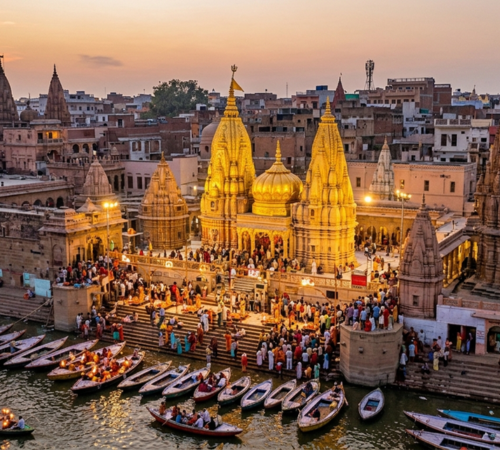
Kashi Vishwanath Temple, Varanasi
Standing on the western bank of India’s holiest river Ganges, Varanasi is the oldest surviving city of the world and the cultural capital of India. It is in the heart of this city that there stands in its fullest majesty the Kashi Vishwanath Temple in which is enshrined the Jyotirlinga of Shiva, Vishweshwara or Vishwanath. Here gravitate the teeming millions of India to seek benediction and spiritual peace by the darshan of this Jyotirlinga which confers liberation from the bondages of maya and the inexorable entanglements of the world. A simple glimpse of the Jyotirlinga is a soul-cleansing experience that transforms life and puts it on the path of knowledge and bhakti. Vishweshwara Jyotirlinga has a very special and unique significance in the spiritual history of India. Tradition has it that the merits earned by the darshan of other jyotirlinga scattered in various parts of India accrue to devotee by a single visit to Kashi Vishwanath Temple.
Deeply and intimately implanted in the Hindu mind, the Kashi Vishwanath Temple has been a living embodiment of our timeless cultural traditions and highest spiritual values. The Temple has been visited by all great saints- Adi Shankaracharya, Ramkrishna Paramhansa, Swami Vivekanand, Goswami Tulsidas, Maharshi Dayanand Saraswati, Gurunanak and several other spiritual personalities. The Kashi Vishwanath Temple attracts visitors not only from India but abroad as well and thereby symbolises man’s desire to live in peace and harmony with one another. Vishwanath being a supreme repository of this spiritual truth thus strengthens the bonds of universal brotherhood and fellow feeling at the national as well as global levels.On January 28, 1983 the temple was taken over by the Govt. of Uttar Pradesh and it’s management ever since stands entrusted to a Trust with Dr. Vibhuti Narayan Singh. Former Kashi Naresh, as president and an Executive Committee with Divisional Commissioner as Chairman. The Temple in the present shape was built way back in 1780 by Late Maharani Ahilya Bai Holkar of Indore. In the year 1785 a Naubatkhana was built up in front of the Temple by the then Collector Mohd. Ibrahim Khan at the instance of Governor General Warren Hastings. In 1839, The two domes of the Temple were covered by gold donated by Punjab Kesari Maharaja Ranjeet Singh. Third dome still remains uncovered, Ministry of culture & Religious affairs of U.P. Govt. is taking keen interest for gold plating of third dome of Temple.
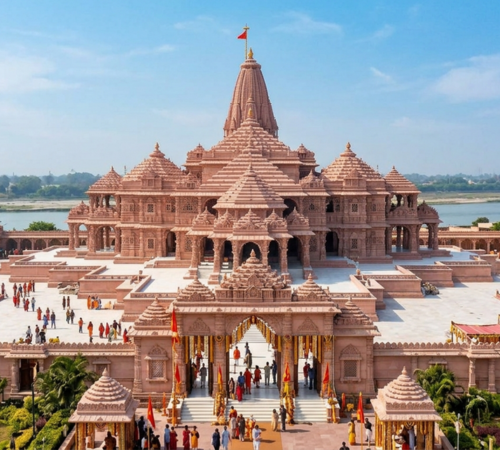
Ram Mandir at Ayodhya
From snow-capped peaks in Kashmir to sun-drenched beaches in Kanyakumari, the echoes of Ram’s name have woven a tapestry of devotion across India. This devotion took a tangible form in the shape of the historic Ram Mandir in Ayodhya. The majestic temple stands tall as a symbol of India’s unity and devotion, not just in grandeur, but also in the tapestry of contributions woven across states and borders. PM Modi’s ‘Ek Bharat Shreshtha Bharat’ initiative resonates deeply with this notion and is a testament to the unwavering faith and generosity that transcends state borders, uniting a nation in the pilgrimage for a temple.
The core of the temple stands majestic, covered in the pristine white elegance of Rajasthan’s Makrana marble. Karnataka’s Charmouthi sandstone, when it comes to the exquisite carvings of deities, takes centre stage. While pink sandstone from Rajasthan’s Bansi Paharpur has been utilized in entrance gate’s imposing figures.
The contributions go far beyond building materials. Gujarat’s generosity extends to the divine melody that will echo through its halls, gifting a majestic 2100 kg Ashtadhatu bell. Alongside this divine bell, Gujarat also presented a 700 kg chariot carrying a special ‘nagada’ crafted by the All India Darbar Samaj. Black stone used for Lord Ram’s idol originates from Karnataka. From the Himalayan foothills, Arunachal Pradesh and Tripura have offered intricately carved wooden doors and handcrafted fabrics, standing as gateways to the divine realm.
The list of contributions doesn’t end here. Brassware, hails from Uttar Pradesh, while polished teakwood, arrives from Maharashtra. The story of the Ram Mandir is not just about materials and geographical origins. It’s about the countless thousands of talented craftsmen and artisans who have poured their hearts, souls, and skills into this sacred endeavour.
The Ram Mandir is not just a monument in Ayodhya; it’s a living testament to the unifying power of faith. Every stone, every carving, every bell, every fabric tells a story of ‘Ek Bharat Shreshtha Bharat’ that transcends geographical boundaries and unites hearts in a collective spiritual journey.
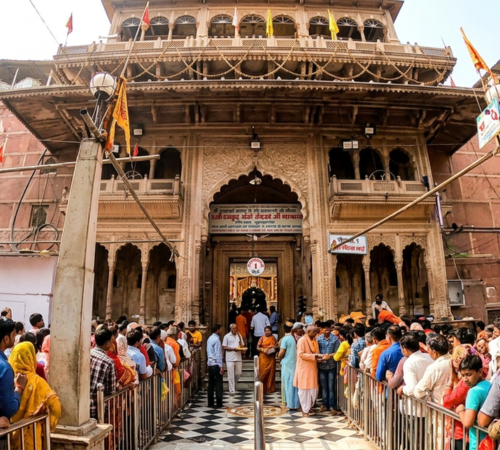
Shri Bankey Bihari Mandir
It is a Hindu temple dedicated to Lord Krishna, in the holy city of Vrindavan in the Mathura district of Uttar Pradesh. It is situated near Shri Radha Vallabh Temple. This temple is among the 7 temples of Thakur of Vrindavan including Shri RadhaVallabh Ji, Shri Govind Dev Ji and four others. Bankey Bihari Ji was originally worshipped at Nidhivana. Bankey means “bent in three places” and Bihari means “supreme enjoyer.” The image of Lord Krishna stands in the Tribhanga posture. Haridas Swami originally worshipped this devotional image under the name of Kunj-Bihari (“Enjoyer of Lakes”).
‘Bānke’ means ‘bent’, and ‘Bihāri’ or ‘Vihāri’ means ‘enjoyer’. This is how Krsna, who is bent in three places, got the name “Bānke Bihāri”.
Cuisine of Uttar Pradesh
Awadhi Cuisine
The one cuisine which is almost synonymous with the cuisine of Uttar Pradesh is the Awadhi cuisine. The central region of the state, which formed the erstwhile kingdom of Awadh, was ruled by the Nawabs (1732 AD to 1856 AD) who traced their origin to Nishapur in Iran. Under them, Awadh not only became famous for its cultural refinement, (tameez and tehzeeb), but also for its high standards of gastronomic etiquette. Food was much influenced by the culinary practices of Iran, Central Asia and local traditions.
The Awadhi cuisine is marked by cooking non-vegetarian items like meat of goat/lamb, chicken, game birds like bater and teetar, game animals and fish in a combination of spices, nuts, raisins, with a liberal sprinkling of cardamom, saffron, kewra and rose water for imparting rich soft aromas. The medium of cooking is desi ghee, butter and mustard oil. An exceptional feature of the Awadhi cooking is the Dum Pukht method. In this, food is sealed in giant pots referred to as handi and placed over low heat, permitting the ingredients to be cooked in their own juices.
The vegetarian delicacies of this region include dal (lentils like toor, chana, masoor and moong) which are seasoned with a tempering of ghee, cumin seeds and asafoetida. Vegetables are cooked dry as well as in curries. Brinjals, bitter gourd and capsicum are stuffed with spices and cooked on slow flame. Curries include vadi or mungodi (sun-dried spicy lentil nuggets) cooked with potatoes, rasaje (a vegetarian “mock meat” dish made from gram flour), kadhi-pakoda, dudhi kofta, nimona or green gram curry. Paneer or cottage cheese is cooked in a variety of ways and is often a vegetarian substitute of meat in gravies and tandoori items. The Nargisi kofta is made with paneer, and khoya, and has a rich thick curry with a liberal dose of saffron. All these are enjoyed with phulkas and parathas. Rice too is a part of the thali and is steamed and eaten with curries and lentils or as separate dishes such as khichadi and tehri. Curd is either consumed plain or in the form of raita, which can be made of cucumber, doodhi, pumpkin or boondi (small rounds of deep-fried gram flour). Fresh coriander and mint chutney, pickles and salad provide the zing. A unique condiment of the region is buknu, a powder made out of a number of spices, which are lightly roasted, then hand pounded and stored in airtight jars
Cuisine of Western UP
The western region of Uttar Pradesh incorporates two distinct flavours one found in the district of Rampur, which was ruled by the Rohilla Pathans from Afghanistan, and the other in and around the district of Mathura or the Brajbhoomi, the land of Lord Krishna. Rampur, though sandwiched between the Awadhi and Mughlai culinary practices, developed its own distinct styles of cooking known as zamindoz and the pasanda. The zamindoz style, mainly used to cook fish, includes stuffing the fish with a mixture of 21 spices and herbs known as the Changezi masala. The fish is then sealed in an earthenware case, which is then buried in the ground. Cow dung cakes are placed over it and are put on fire. The fish is left to cook for at least 6-8 hours, after which it emerges full of flavours.
The pasanda, is the prime cut of meat, (the word “pasand” meaning “favourite”). The meat is flattened into strips, marinated, and fried in a dish with spices. The dish is garnished with tomatoes or almonds (in which case it is known as Dadaam pasanda). It is often served with white rice or typical bread like fitri, and Rampuri naan. The paneer pasanda is a favourite version for vegetarians.
The region of Braj is the holy land of Lord Krishna and food is made in a sattvik manner, i.e., vegetables and curries are made without using onions and garlic and the flavour comes from using ghee (as the medium of cooking), roasted ground spices, fresh ginger and green chilies. The cuisine is full of milk, curd, and butter. Sweets made from these such as rabdi, and khurchan, are daily sent to the shops in Delhi. The most famous are the Mathura ke pede and Agre ka petha. While the petha is a sweet made out of white pumpkin, the peda is made with milk solids or khoya. Milk is simmered till it turns brownish. On cooling, sugar syrup and powdered cardamom are added. Everything is mixed well, shaped into small round balls and pressed in the middle.
The, bedmi puri, popular throughout UP, is especially savoured in this region. It comprises of puris stuffed with ground urad dal and spices and is paired with a spicy and tangy potato curry. It is eaten as a breakfast item but is also available throughout the day.
CUISINE OF EASTERN UP
The cuisine of this region is influenced by the overwhelming presence of the holy city of Varanasi. Soaked in antiquity, the city of Banaras is known for its piety, simplicity, and refined tastes. Dishes made in pure ghee are a hallmark of this region, be they sweets or the popular kachori-subji. The cuisine is also influenced by the culinary practices of the neighbouring states of Bihar and Jharkhand, which is evident in the liberal use of mustard, both in the form of paste and oil. Potatoes and yams are cooked in a fresh yellow mustard paste along with onions, ginger and garlic which provide a unique sharp taste. Mashed roasted or boiled potatoes (and sometimes other vegetables) are seasoned with fresh herbs, onions, tomatoes, ginger, green chilies, salt, roasted powdered cumin seeds and a liberal dose of mustard oil to make a dish called chokha. Except for roasting/boiling the vegetables, the rest of the process is done away from the fire. Rice or bhaat (sticky white rice) is preferred here over the separated grains of the Awadhi rice.
The famous Banarsi paan, which is served after meals, consists of a betel leaf smeared with katha (catechu paste) and chuna (lime), on top of which condiments such as cloves, suparn (areca nut), saunf (sweet fennel seeds) and sometimes gulkand, a thick sweet rose petal preserve, are placed. The leaf is folded in a triangular shape, coated with pounded silver leaf (chandi ka Warg) and is served cold.
Bundelkhandi Cuisine
The southern part of the state, a part of the larger Bundelkhand region lying in the neighbouring state of Madhya Pradesh, is marked by barren hills, ravine fringed river channels, and sparse vegetation. The cuisine of this area is marked by the use of different types of coarse grains or millets, game meat cooked with freshly pounded spices, sparse use of oil, and the use of the mgredients from the local rivers and ponds, such as lotus root (kamal kakdi), and water chestnut Traditional dishes include Bundeli gosht, Kadaknath Murgha, Keeme ki Tikki, and Bhate ka bharta.
Anwariya is a typical dish of this region made from pureed amla (Indian gooseberry). The berries are crushed and sautéed in oil/ghee till they turn into a soft paste. Gram flour is mixed with water along with turmeric and salt. The gooseberry paste is mixed in this and the liquid is boiled till it is cooked. The preparation is tempered with oil, asafoetida, mustard seeds, whole red chilli, red chili powder and curry leaves
Snacks
The most popular street food item is the chaat. It includes Aloo Tikki, Pani ke Batashe, Matar ki Tikki, and Dahi Bhalle, which are all served with sweet and tangy chutneys and fresh herbs. The samosa is ubiquitous all over the state. Also popular are, Laaiya Chana, Choora Matar and Tamatar chaat, which are dry snack items mixed with freshly chopped onions, tomatoes, green chilies, salt and red chili powder. Pakoras (fritters) made out of onions, potato, paneer and crepes made out of moong daal (cheela) are popular homemade items.
Desserts
The desserts range from simple items such as kheer (rice slow cooked in milk and sugar), halwas and laddoos to the special dessert of the Nawabs, the Shahi Tukda. The latter is made out of deep-fried bread slices which are then dipped in a thick sugar syrup and topped with cream and pistachios. Also popular is the Sheer Khurma, which is the vermicelli dish made especially on the occasion of Eid. Kulfi or the hand churned Indian ice cream, made out of thickened milk and dry fruits is very popular during the summer months.
However, the pride of place is held by a delicate, fluffy milk pudding made with cream called Malai Makkhan or Nimish in Lucknow and Malaiyo in Benaras. A specialty from Lucknow is the Malai Paan, which is a thick layer of cream (malai) filled with a sweet syrupy mixture of dry fruits, folded like a paan and covered with silver warq. Thandai is a very popular milk-based cold drink, which is popular throughout the state.